

Sarah Perrin-Bergot étudiante en dernière année de DNA (Diplôme National
d’Art) à la Haute école des arts du Rhin, dans l’Atelier livre, est en stage au Cdla du 1 juillet au 31 juillet 2022.

Sarah Perrin-Bergot étudiante en dernière année de DNA (Diplôme National
d’Art) à la Haute école des arts du Rhin, dans l’Atelier livre, est en stage au Cdla du 1 juillet au 31 juillet 2022.


Claes Oldenburg 28 janvier 1929 – 18 juillet 2022
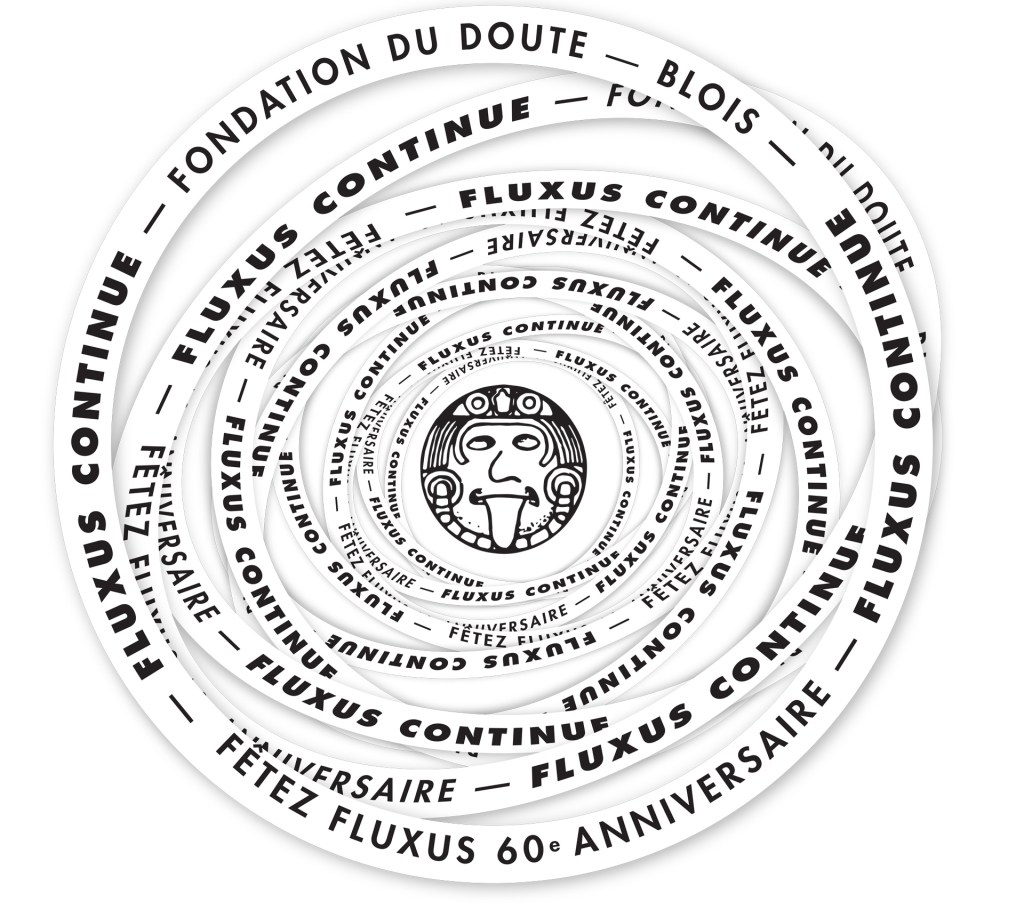
dossier de presse Fondation du doute juillet – novembre 2022

UN PROGRAMME AUTOUR
DES LIVRES D’ARTISTES
En partenariat avec le Cdla – Le Centre des livres d’artistes
Régulièrement une grande vitrine, installée dans l’espace dédié à l’implication et à l’édition, sera animée par le prêt d’éditions rares et livres d’artistes accordé par le Cdla.
Proposition 1 – Carolee Schneemann, artiste plasticienne pluridisciplinaire américaine, qui a apporté une contribution fondamentale à divers mouvements artistiques : Body art, happening avec Fluxus, artiste féministe, elle a beaucoup travaillé autour du corps, s’intéressant notamment à la sexualité et au genre.
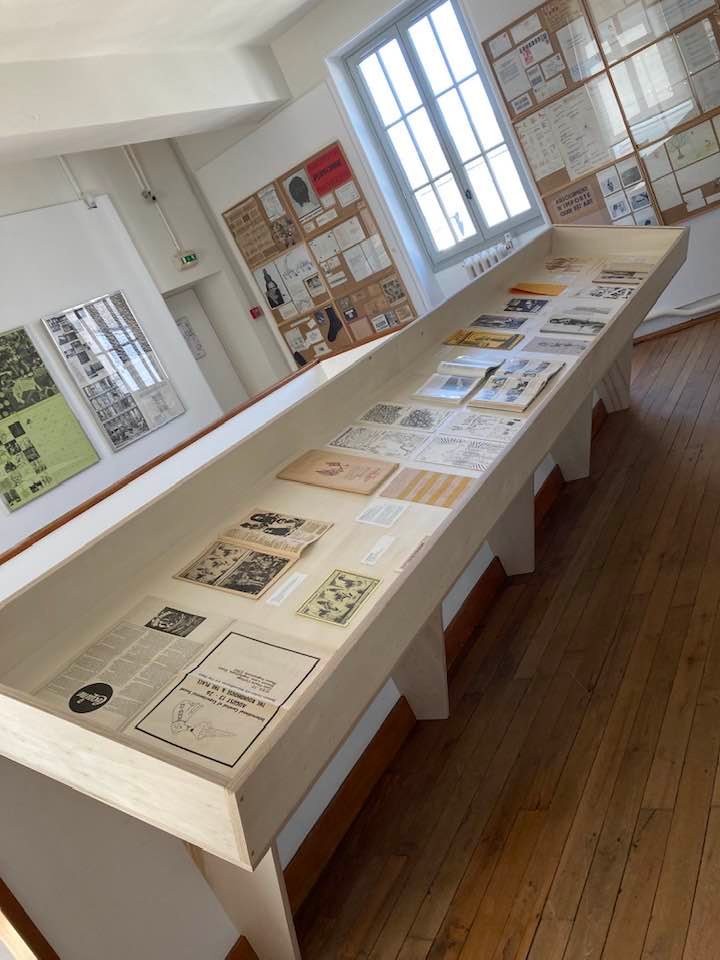

Carolee Schneemann
Parts of the Body House Book
Cullompton, Devon : Beau Geste Press, mars 1972. Low-cost ed.
– 46 p. agrafées ; 33 x 20,5 cm. – Imprimé en noir et bistre sur papier gris.
– Couverture illustrée, imprimée en noir, en carton jaune.
coll. cdla – inv. n° 205 18
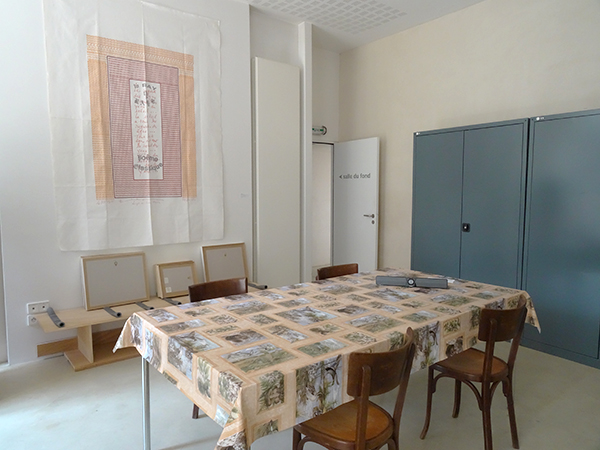
au mur Henri Chopin
To Ray the Rays Poème classique
[Vérone : Francesco Conz, 1992. 8 séries de 35 ex. chaque imprimées en
orange et bistre ; orange et bleu pâle ; orange et vert ; orange et rouge ; orange et ocre, orange et noir ; orange et gris ; orange et bleu.]
– Cet exemplaire imprimé en sérigraphie sur tissu blanc, format 217 x 154 cm,
en orange et rouge.
– Numéroté 4/5 A.P. et signé au feutre rouge.
inv. n° 059 20. Don.
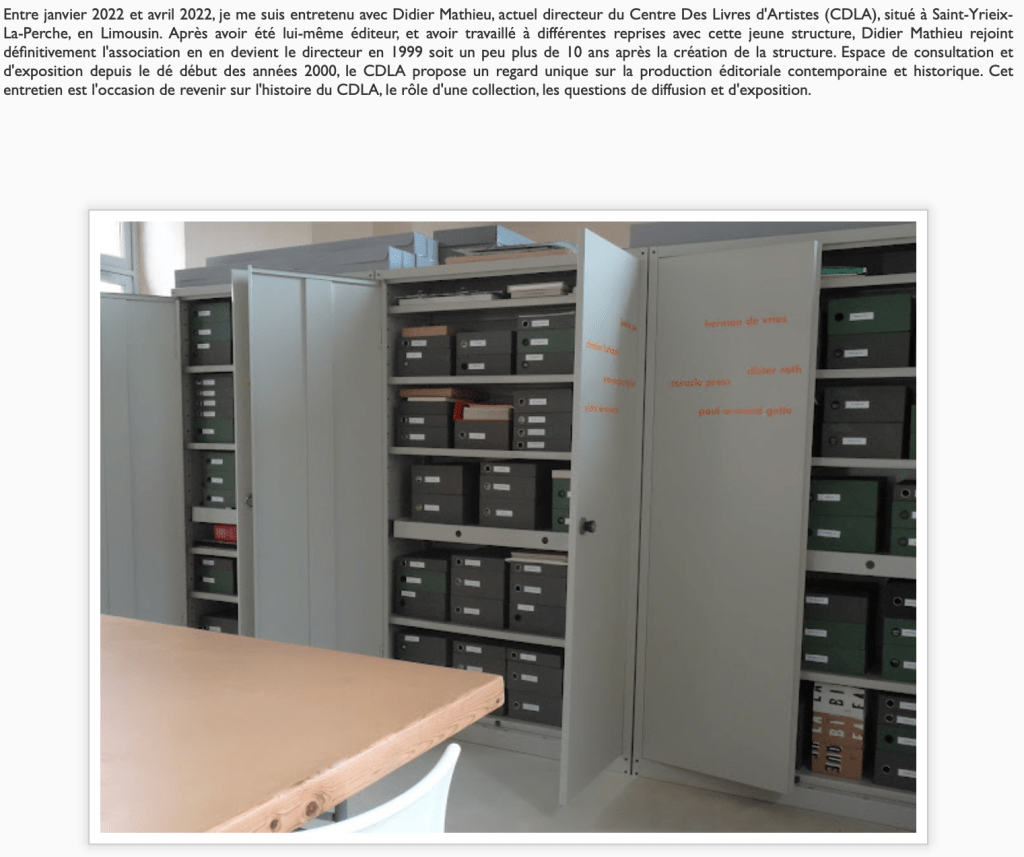
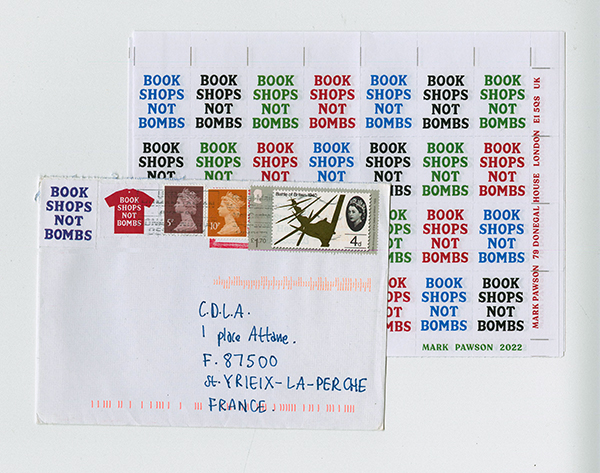
Merci à Mark Pawson

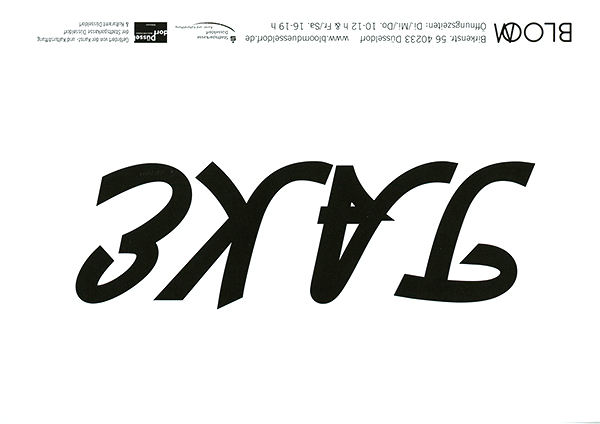

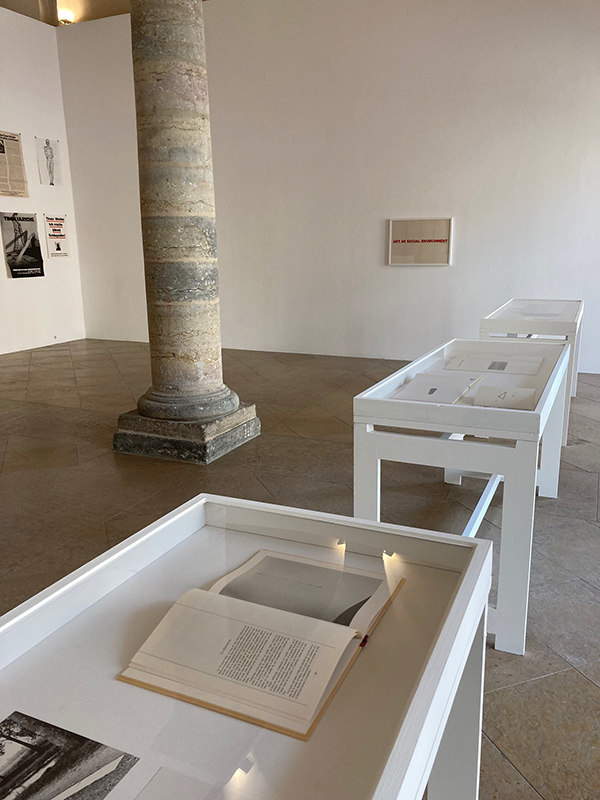
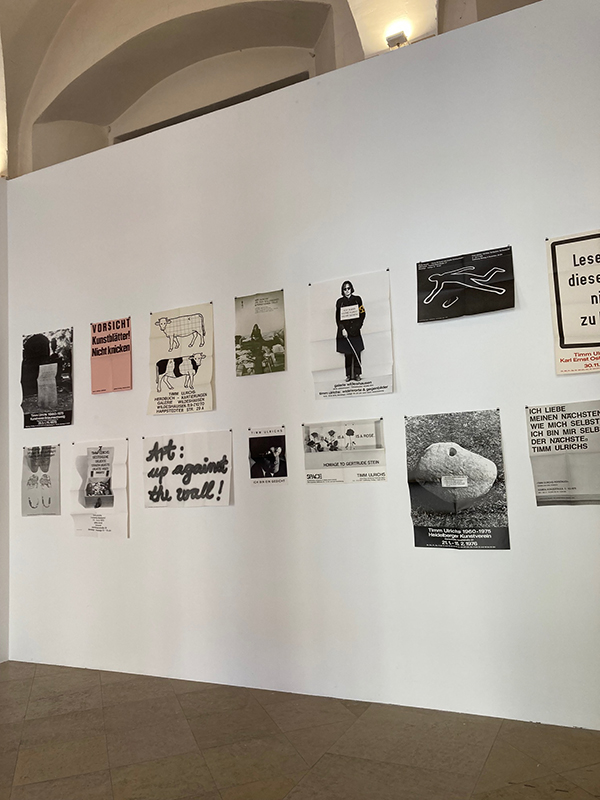
Exposition du 30 mars au 16 avril 2022
École nationale supérieure des beaux-arts de Lyon
Exposition en partenariat avec le Centre des livres d’artiste
Un choix d’œuvres de la collection du Centre des livres d’artistes (Cdla) effectué par des étudiant·e·s et professeurs de 2e et 3e année art de l’Ensba Lyon : Albane Bultel, Judith Dal Moro, Esteban Devignaud, Aloïs Jacquetin, Romain Monnot, Theophile Rolland, Lisa Rouchon, Charlotte Vignes, accompagné·es de Nicolas Romarie et Veit Stratmann.
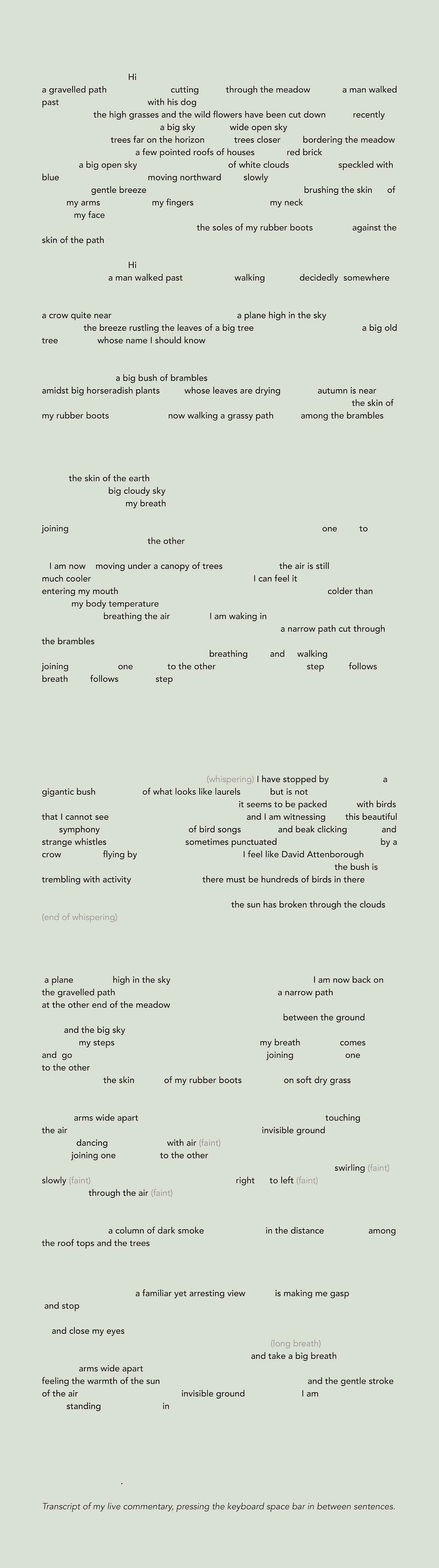
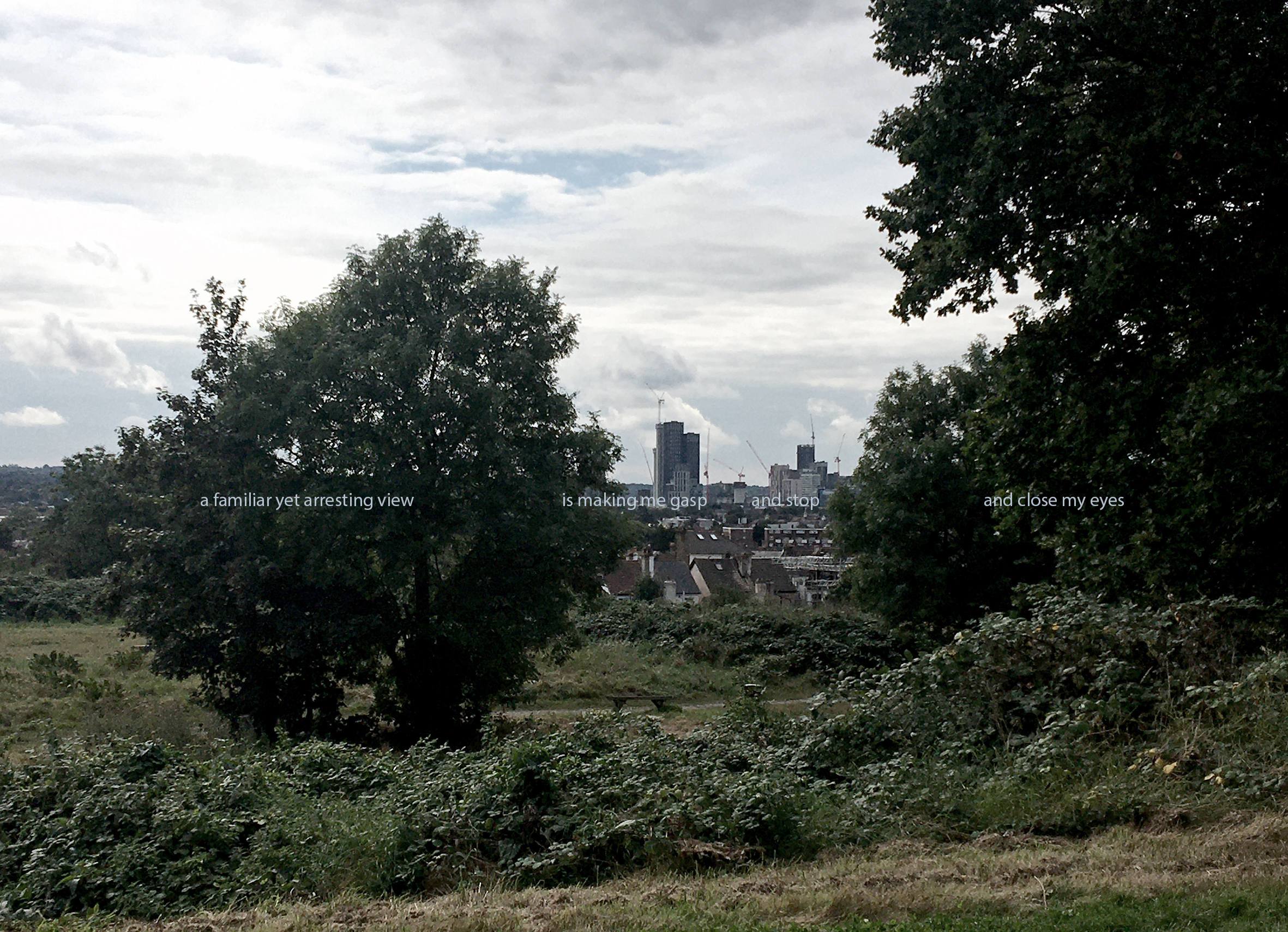
Walking in Air ‘de chez soi’ – 17/09/21 – 11.28 am

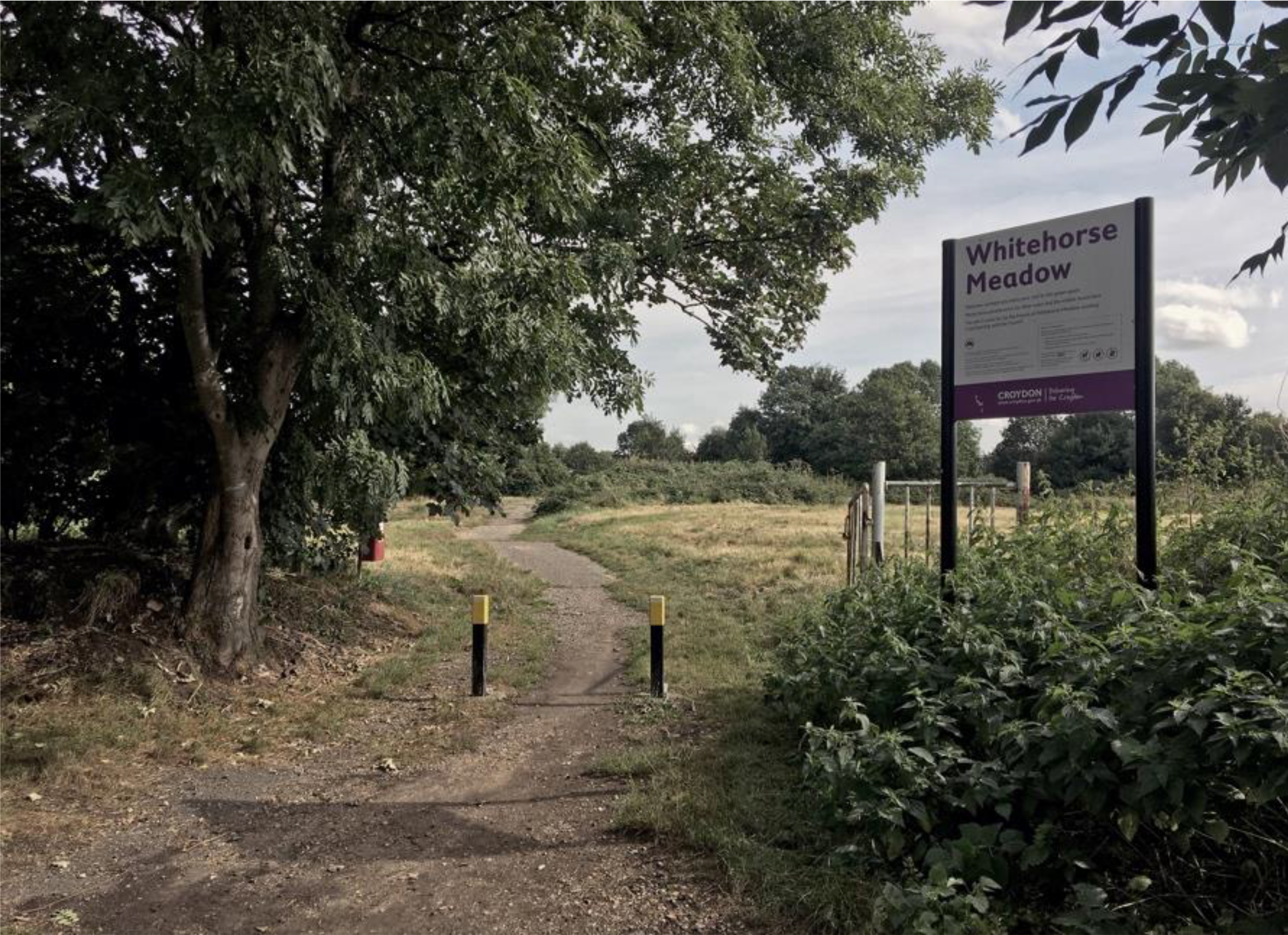
Whitehorse Meadow, SE25 London.
Walking in air in Thornton Heath, 17/09/2021,11.28am

Walking in Air ‘de chez soi’
a few notes before and after
Thornton Heath – 17/09/21, 9.48 am
Today, it is almost autumn, sunny outside finally, after a typical wet British summer and I am going to be walking in air for the second time, near my home in South London. The first time I went there to walk in air, it was on a cold January day in the middle of a long locked down winter, and it blew my mind. As I walked and paused in Whitehorse Meadow, it felt as if every particle of my body, of my mind and of my senses were dancing inside out, in on and with air. A hard act to follow, so I am trying to have no expectation beyond letting my body and my breathing do the thinking as I move through the weather world between earth and sky, joining one to the other.
As I am writing these few words on the pages of my sketchbook, I am distracted by the loud and clunky sounds of the binmen truck weekly collection in the street outside. I raise my eyes and come across this quote on my laptop screen. “As the crickets soft autumn hum is to us, so are we to the trees, as are they to the rocks and hills” (Gary Snyder’s words used by David Abrams to conclude his preface to his book “the spell of the sensuous, perception and language in a more than human world” (1997).
Walking in Air – Whitehorse Meadow, SE25 London – 17/09/21, 11.28 to 11.58 am
Thornton Heath – 17/09/21, 13.15 pm
I am now sitting in my garden, coffee in hand, not far from mamba comfortably and majestically stretched in the middle of an oversize cushion that she has claimed as her summer quarters. I hear water gurgling from the next door neighbour’s garden pond, a plane flying low over my head towards Gatwick airport, this never happened before lockdown.
I walked in air on familiar ground, from time to time thinking aloud in the weather world, zoom recorded held with both hands, arms stretched in front of me, to ensure stereo quality and minimal friction noise. It was not the mind blowing and boggling experience of my first attempt in January, but a gentle and close encounter with the ground, the sky, the air and everything, small and big, visible and invisible occupying it, a gradual becoming alert of all senses and nerve endings, while eyes, ears, skin, arms and feet danced in on and with air. My mind was happy to sit back and enjoy this pause from the chaotic juggling of my everyday, even more so now that the fast pace of life as we knew it is resuming without much warning. The only thoughts occupying her was wondering what the trees I couldn’t name, the birds and the foxes I couldn’t see but hear in the bushes and brambles, the crows, the wood pigeons, the sky, the insects, the grass, the horseradish and other wild plants, what did they all think of us ? How did they perceive us if at all. As one of them more than humans, or as hooligans responsible for the toxicity and slow demise of the environment we share.
I encountered three humans while walking in air today. One was walking his dog, another was walking purposefully fast with a full rucksack on his back, on what seemed to be some kind of circular circuit training since he passed us twice with the same speedy determination, just sweating a bit more the second time. The 3rd one was sitting on a bench next to his bicycle loaded with 2 satchels, checking his itinerary on his mobile phone. All of us walking, jogging, sitting in the same air, our breath coming and going and joining earth and sky.
Today Monday I went back to the Meadow to find out the names of the Trees and bush I couldn’t name with the help of my trusted ‘picture this’ app. The big old tree whose leaves were rustling in the breeze is a common Ash (Fraxinus excelsior). A big Butterfly Bush (Buddleja Davidii), also known as Summer lilac, was the temporary abode of hundreds of singing and whistling birds. It was now very quiet and interestingly enough, it was not where I expected to find it: it took me a while to locate it in this small meadow that I know inside out. This made me realise that perhaps my walking in air the other day had possibly been as mind altering as that first one.
© Emmanuelle Waeckerlé 2021

 le cdla
Vous devez être connecté pour poster un commentaire.